Reviewing Shohei Ohtani's Value to Dodgers in 2026
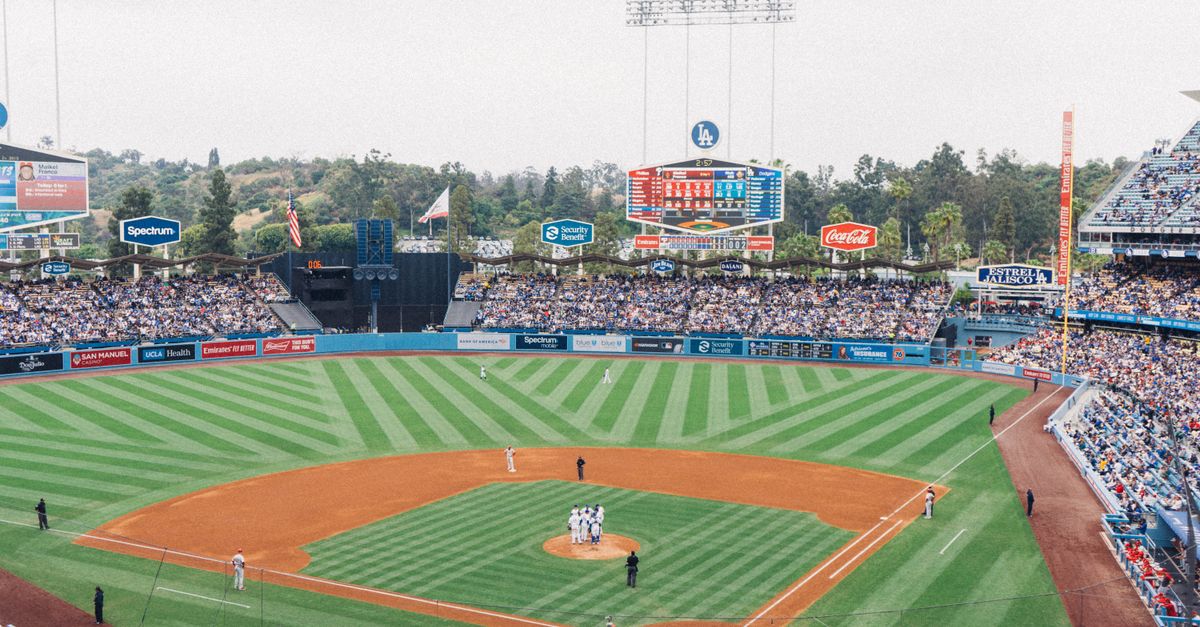
When assessing whether the biggest contract in sports history is paying off, the answer in 2026 is an emphatic yes. Two full seasons into his 10-year, $700 million deal, any realistic shohei ohtani 2026 contract review shows that the Los Angeles Dodgers are actually running a surplus on their superstar.
Between a modest $2 million base cash payout, a $46.08 million annual Competitive Balance Tax (CBT) hit, and his return as a frontline starting pitcher alongside his elite designated hitter role, Ohtani provides on-field production that routinely exceeds $60 million in open-market baseball value. Add in unprecedented global marketing revenue, and Los Angeles holds arguably the most efficient superstar agreement in modern sports finance.
The 2026 Financial Reality: CBT vs. Cash Flow
To conduct an honest shohei ohtani 2026 contract review, you have to separate paper accounting from actual ledger expenses. Headline writers still reference $700 million, but the Dodgers front office operates under two distinct numbers this season: $2 million in real-time salary and a $46,081,476 luxury tax hit.
Because Ohtani chose to defer $68 million annually until 2034–2043, Andrew Friedman and the front office have retained enormous short-term agility. In 2026, while rivals manage $35M–$40M base payroll spikes for aging aces or one-dimensional sluggers, Los Angeles uses this structural discount to preserve roster depth across the bullpen and rotation.
| Contract Element | 2026 Metric | Real Roster Impact |
|---|---|---|
| Actual Cash Salary | $2,000,000 | Minimal impact on day-to-day liquidity |
| CBT Cap Allocation | $46,081,476 | Anchors the tax payroll without freezing luxury thresholds |
| Deferral Reserve Obligation | ~$44,000,000 escrow | Managed through Guggenheim corporate investments |
By keeping actual out-of-pocket payroll commitments at league-minimum levels for their top superstar, the Dodgers bypass the liquidity crunches that usually hit clubs carrying multiple Hall-of-Fame caliber contracts.
Two-Way Production: Evaluating WAR per Dollar in 2026
The central pillar of any on-field shohei ohtani 2026 contract review is his return to regular mound duties. Following his calculated, bat-only season during his recovery period, 2026 features Ohtani working as a fully integrated weapon in a six-man rotation while remaining the centerpiece of the lineup.
On the hitting side, baseline projections hold steady: an OPS pushing .950 to 1.000, 38 to 45 home runs, and elite baserunning value. That offensive profile alone commands roughly $30 million to $35 million annually in today’s free-agent market.
On the pitching side, even with load management limiting him to 130–150 innings, his strikeout rate and top-of-the-rotation run prevention represent another $25 million in surplus market value. In total, Ohtani projects to generate between 7.5 and 9.0 Wins Above Replacement (WAR) this season. At current valuations where 1 WAR costs approximately $8.5 million to $9 million on the open market, Ohtani delivers upwards of $65 million to $75 million in on-field equity for a $46 million tax cost.
The Off-Field Revenue Machine: Offsetting the CBT Hit
Most elite contracts represent pure operating expenses. In this shohei ohtani 2026 contract review, however, his business portfolio transforms him into an independent profit center for Guggenheim Baseball Management.
Unlike any player since Michael Jordan, Ohtani attracts corporate money that otherwise would never enter the baseball ecosystem:
- Japanese Corporate Sponsorships: Exclusive field-level rotational signage behind home plate and outfield walls sold to Japanese enterprises generates over $25 million annually.
- Stadium Concessions and Retail: Japanese tourism packages targeting Dodger Stadium games remain at record highs, driving sky-high merchandise volumes at retail stores inside Chavez Ravine.
- International Broadcast and Licensing Rights: Targeted international media packages and team-specific marketing rights continue to provide long-tail revenue streams.
Conservative internal projections suggest Ohtani generates between $40 million and $50 million in incremental annual club income. In practical terms, his commercial footprint nearly neutralizes his entire $46.08 million CBT calculation before he even throws a single split-finger fastball.
Risk Factors and Durability Checks in Year Three
No evaluation is complete without stress-testing downside scenarios. Heading through his age-31 campaign in 2026, the risk variables center strictly on physical preservation.
Managing the physical demands of pitching once every six days while hitting every day requires continuous calibration. If minor arm fatigue or soft-tissue tightness limits his rotation starts to 15 or 18 outings, does the valuation break down?
Historically, the answer is still no. Even if Ohtani were forced off the mound for half the summer, his defensive flexibility as a designated hitter paired with 40-homer offensive output insulates the floor of the contract. The contract does not carry opt-outs that allow him to walk away, keeping Los Angeles in full control of his usage and medical strategy through his physical prime.
Final Verdict: A Strategic Masterstroke for Los Angeles
Completing this comprehensive shohei ohtani 2026 contract review, the transaction remains one of the sharpest front-office executions in baseball history. The Dodgers locked in a generational cultural icon and the most multifaceted talent on earth while preserving the payroll agility necessary to build a perennial World Series roster around him.
He is performing as an elite slugger, an upper-tier starter, and a self-funding business apparatus. For the Dodgers in 2026, Ohtani isn't just worth the commitment—he is performing at a substantial market discount.
Frequently asked questions
What is Shohei Ohtani's salary for the 2026 season?
Ohtani earns $2 million in real cash salary in 2026. The rest of his $70 million annual average value ($68 million) is deferred until 2034 through 2043.
How does Ohtani's contract affect the Dodgers' luxury tax in 2026?
For Competitive Balance Tax (CBT) calculations, Ohtani counts as approximately $46.08 million against the Dodgers' 2026 payroll threshold, reflecting the discounted present-day value of his deferred payments.
Does Ohtani have an opt-out in his Dodgers contract in 2026?
No, Shohei Ohtani does not have standard performance-based opt-out clauses in his contract. There are specific executive personnel trigger clauses tied to ownership and front-office leadership, but no player opt-outs.
Does Ohtani pay for his own contract through marketing?
Virtually yes. Industry estimates indicate that Dodgers stadium signage, Japanese corporate partnerships, licensing, and merchandising bring in between $40 million and $50 million annually, effectively offsetting his competitive balance tax hit.